


 Older
Older
Dear Ben & Frank
Do you ever look at other peoples work and wish you had done it?
Question Submitted by Liz
Ben SaysOf course it happens, but I think competition can be a good and healthy thing if you don’t let it consume you. It keeps you humble and gives you something to work toward.
I personally can’t draw very well, so I often get hung up on technical issues of drafting and craftsmanship. The way I look at it though is that if someone else can do something there is no reason why I shouldn’t be able to either, I just have to work harder.
Currently, I get physically ill when looking at Jessica Hische’s work because it’s soo good.

Frank SaysSure. I think creative envy, when in check, plays an important role in self-improvement. I never try to directly compare my work to other people’s though, because I can never be sure if the goals I have for my own work are the same as others.
I think I’m getting more comfortable in my own shoes as I go along, though. I know what makes sense for me and makes the things that I make my own. I’m having that envy feeling less and less, and it’s being replaced by a certain feeling of marvel and wonder, which I much prefer. Rather than looking at great work and saying I wish I made that,
its changing little by little to That’s wonderful. I’m really glad someone made this.
Dear Ben & Frank
If you could be reborn as a movie star, who would you be?
Question Submitted by Soleio
Ben Says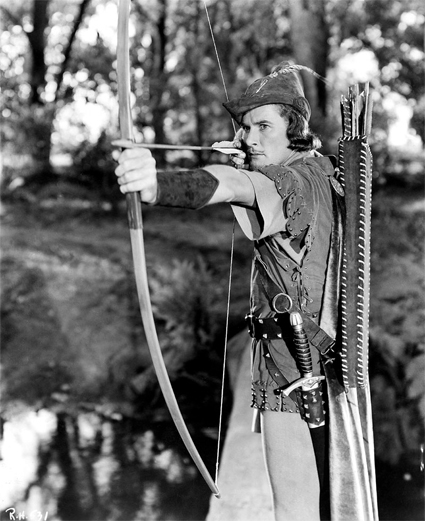
Frank Says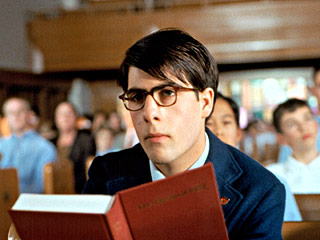
Dear Ben & Frank
Is it dishonest to create fictional projects for a portfolio?
Question Submitted by Dan Marek
Ben SaysNot at ALL if you’re a student. Even as a young professional I think self-initiated design projects are a great way to try out new ideas or techniques.
That said, one of the most important qualities of a good professional designer is the ability to sell his or her ideas to a client. If your entire portfolio consists of self-initiated projects it doesn’t show your ability to do this so I personally always try to find a balance.
Frank SaysI think it’s completely reasonable to expect young designers and illustrators to have fictional projects in their portfolio. It allows younger, less experienced students and designers tackle the issues inherent in large, multi-dimensional projects that would be difficult for someone with little experience to do professionally. Consider it the batting cages.
With that being said though, I think there’s an obligation for the designer or illustrator to clearly mark these projects as pilot projects or fictional projects inside of their portfolio.
Dear Ben & Frank
What are your opinions on the current conventions of font pricing?
Question Submitted by Anonymous
Ben SaysHaving designed a fair amount of my own type I understand how much time and effort it takes to develop a good font family. I think most fonts are reasonably priced for large projects and businesses, but I know it’s very difficult for small design firms and freelancers to always purchase type. I think part of the problem is that it can be extremely difficult or unrealistic to convince small business clients of the value a specific typeface can bring to their project, but I don’t think most designers want to rip off or undervalue the work of type designers.
That said I don’t think it’s realistic to expect students to purchase type. They already have so many expenses that dropping hundreds of dollars for a font to use on a non-commercial project just isn’t realistic.
On a side note I heard Rich Roat from House Industries speak a couple years ago and he was talking about a website they were developing for a photo lettering catalog they had acquired and were digitizing. What he said was that they were making a site where you could log in and set the word or phrase you needed and view it in all of their typefaces. Once you found the one you wanted you could purchase the type on a letter by letter basis and the site would output an EPS file for you to use in your work instead of purchasing the entire font. I don’t know what the cost will be per letter but this seems like a wonderful solution for display typefaces where you don’t need to set large amounts of copy and don’t have the budget to purchase an entire font. This might not the the best and final solution to the font stealing problem that plagues our industry but it has the most potential of any ideas I’ve heard so far. I haven’t heard or seen anything about this since Rich’s presentation but I’m hopeful they’re still working on it.
Frank SaysYou know, I think typefaces are generally priced fairly. Creating a typeface is hard, time-consuming work. Also, their applications are wide-spread. Both should be valid reasons for their prices. If the price of a typeface is prohibitive for you, the solution is simple: you just don’t buy it.
But honestly, when’s the last time you used all of those fonts in you’ve accumulated? I’d like to assume if you’re any kind of designer worth your salt, you’ve got ten to twenty work horses that are doing a ton of work for you.
Dear Ben & Frank
What would you do if a meteroite was going to hit the earth?
Question Submitted by Petra
Ben SaysWatch video on YouTube
Frank SaysI’d probably feel obliged to help organize an effort to get some men that worked on an off-shore oil rig to join a mission. The purpose of that mission would be to land on the meteoroid, drill in to it and then plant a bomb. I hope it goes okay, and I hope everyone survives the mission.